


I’ve been reading Who Knew by Barry Diller this week. He’s the chairman and senior executive of IAC and Expedia Group, and before that he founded Fox Broadcasting with Rupert Murdoch and built USA Broadcasting, essentially shaping modern television.
I had the chance to meet Barry twice during my early days at Tinder.
The first time was three days before Christmas in 2015. I was still new at the company and trying to make a name for myself, so I showed up on December 22nd with just a few others.
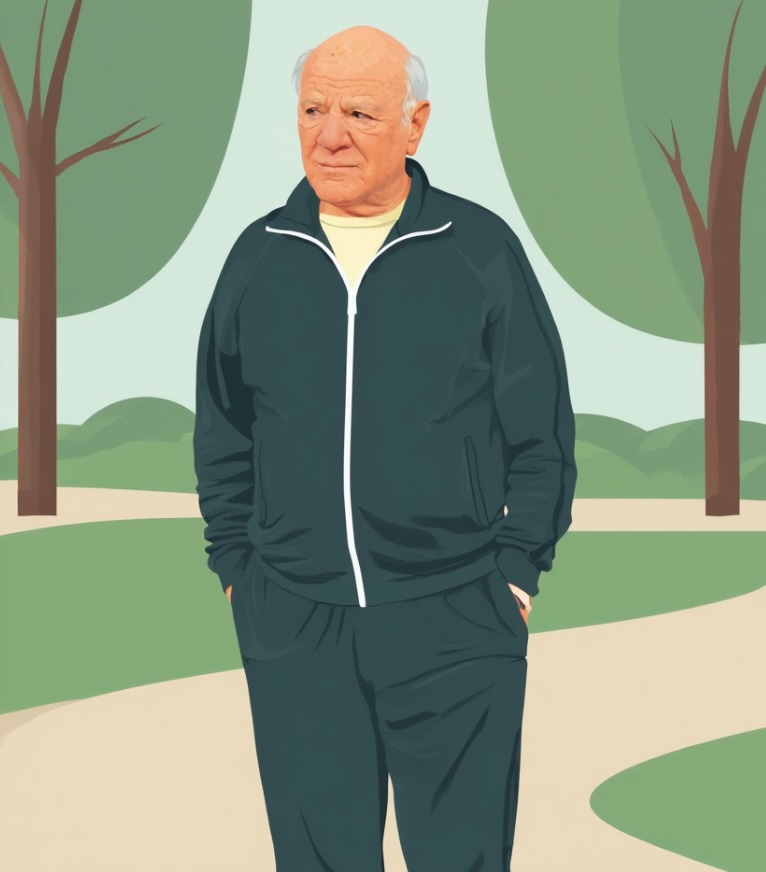
“Who’s that guy in the tracksuit?” one of our youngest engineers asked, looking up from his monitor.
I glanced over and saw Barry Diller, owner of IAC and one of Tinder’s biggest shareholders.
I didn’t know it at the time, but Barry — then 75 years old — had a tradition of visiting the Tinder office right before Christmas every year. He’d walk the floor asking questions, genuinely curious about what everyone was building.
I watched him approach one of our engineers and ask, “What are you working on?”
The engineer started explaining what he was doing in very technical terms, and Barry listened without interrupting. I don’t think the engineer knew who he was because if he did, I’m pretty sure he would’ve been a lot more nervous explaining his code!
A year later, in 2016, I made sure to be in the office those same few days before Christmas. The office was mostly empty again and we had just moved into a much larger space.
Sure enough, the guy in the tracksuit showed up again, right on cue. Barry Diller.
He made his rounds, saying hello and asking the few of us still in the office the same question: “What are you working on?”
One of the central themes of Who Knew and of Barry’s career is his obsession with understanding how things work at the most fundamental level.
Only if I slowed everything down could I begin to understand all the parts and then try to rearrange them into something coherent. I tend to make things worse in the beginning as I fumble around trying to get to basic truths. Instinct, which I prize almost all else, doesn’t work very well for me in abstruse matters.
I have to get to the core DNA on any matter, its logical essence, before I can add anything of value. This takes a lot of time, often to the irritation of faster thinkers, but when it does crystallize, I can’t be deterred.I listen with an extra ear, highly attuned to hear a new truth among the cacophony of voices in the room. When I catch that note, no matter what I might have thought before, I’ll change course in a second.
If I’ve ever had any kind of secret sauce, it’s the ability to hear conflicting, creative ideas bombarded around the room and extract something valuable. Recently in a meeting, someone complained that I wasn’t being consistent. I replied that I’m never consistent; I’ll turn on a dime if I hear a better truth.”
- Barry Diller, Who Knew
Looking back, I realize that when he asked what we were building, it wasn’t about big timing us or management control. It was pure curiosity.
Most leaders want to look smart. Barry wanted to get smart and understand the smallest molecule of what we were building as engineers and product people, even on the sleepy days before Christmas.
Because the best investors and leaders don’t chase outcomes. They want to understand the wiring underneath.
Show up, ask questions, and keep asking until it makes sense. The tracksuit is optional.
Curiosity is a superpower that only comes from being comfortable with not knowing. Consistency bias is a real thing. Being able to change your mind when the facts change is increasingly rare, right?